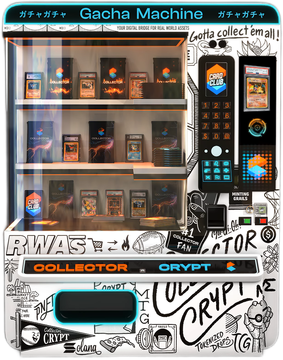
GACHA turns its own trading fees into real graded Pokémon cards automatically opened live on Collector Crypt and airdropped to holders.
$GACHA is a token launched on StonkFun paired with CARDS. Every trade generates creator rewards which are used to open packs and airdrop the cards to eligible holders. Half of the creator rewards go to the team.
StonkFun sends the creator share to the GACHA treasury every few minutes. Our bot automatically uses the creator rewards to open packs and airdrop them to eligible holders.
GACHA opens Pokémon packs on Collector Crypt. Each pull is a real, graded card, vaulted and tokenized as an NFT.
Every pulled card is airdropped straight to an eligible holder's wallet. Wallets holding between 0.25% and 4% of the $GACHA supply qualify, larger holders are weighted higher.
The pack opening is displayed live on our website in real time: the machine opens, the slab flips, the card and its value are revealed, and it is airdropped to the holder.
Every card pulled by GACHA is airdropped to an eligible $GACHA holder. Wallets holding between 0.25% and 4% of the total supply qualify.